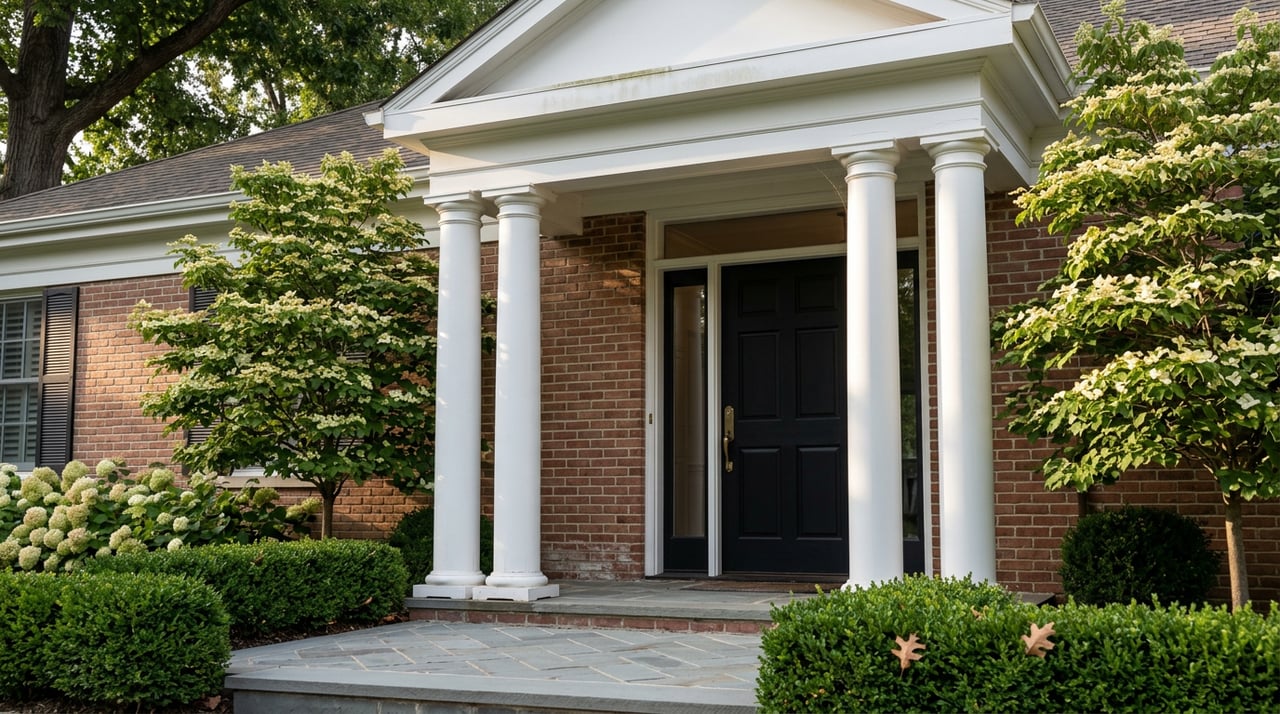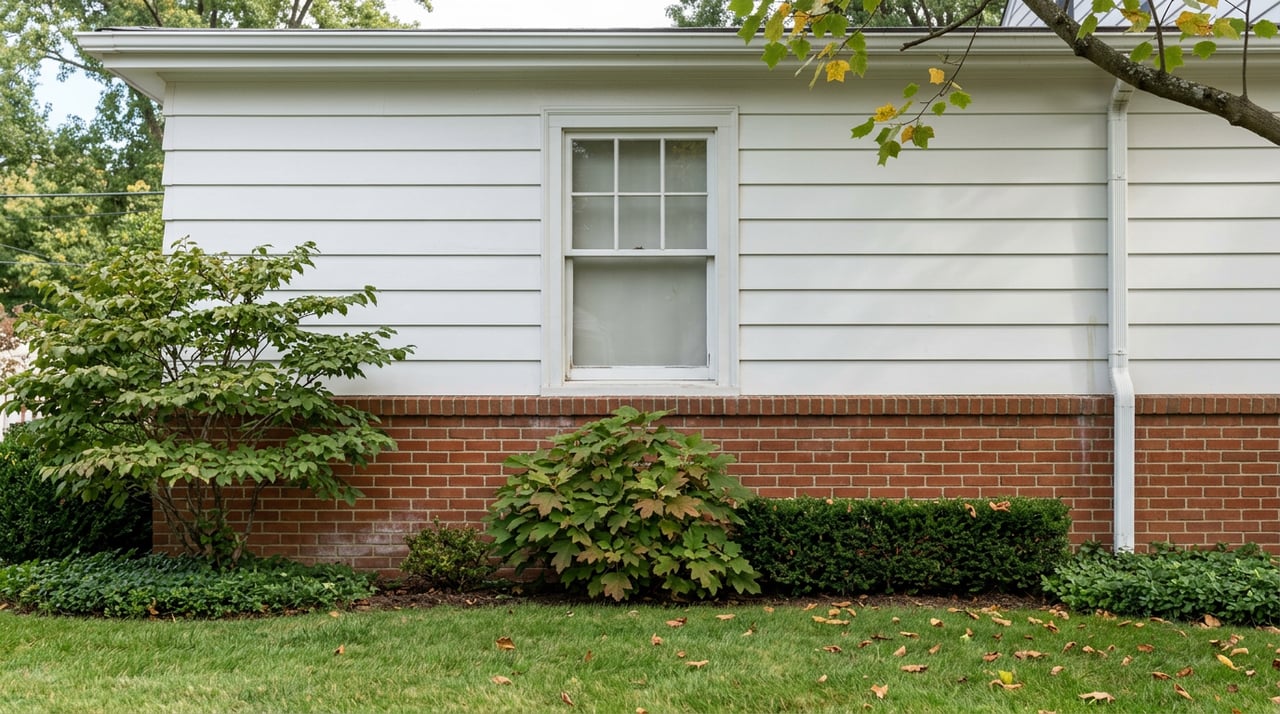
If your house in Highland Park, Metuchen, Milltown, or South River was standing before 1990, one question will decide more of your closing timeline than your kitchen renovation ever will: is there a tank buried somewhere on the property, and does anyone have paperwork proving what happened to it.
Most sellers in Middlesex County's older rail-line boroughs don't ask that question until a home inspector asks it for them, usually by pointing at a capped pipe near the foundation or a patch of dead grass along the side yard. By then the buyer has leverage, the closing date is fixed, and the seller is negotiating from the weaker position. The fix isn't complicated. It just has to happen before the sign goes in the yard, not after an offer is already on the table.
Why This Question Follows the Rail Line
Highland Park's residential streets were largely laid out and mapped well before anyone thought about natural gas conversion. Borough history records show that by 1930, most of Highland Park's land had been sub-divided and its streets mapped out, growth that traces back to Watson Whittlesey's Livingston Manor development, which began in 1906 and had produced 62 houses by 1910. That construction wave, and the similar ones that shaped Metuchen, Milltown, and South River along the same commuter corridor, happened during the decades when heating oil was the default fuel for a new house, not the exception.
New Jersey carried that pattern statewide. Industry estimates put the number of buried heating oil tanks still under New Jersey properties above 500,000, and if you own a home in New Jersey that was built before 1990, there's a significant chance you're sitting on top of a buried oil tank. Middlesex County's older boroughs sit squarely inside that window. The tank isn't a defect specific to any one house. It's a predictable feature of the era these towns were built in.
The Part of the Story the Conversion Numbers Hide
Here's where the obvious read on the data gets it backward. Heating fuel numbers for Highland Park show natural gas is the preferred choice, used by 4,409 or 67% of residents, followed by electricity at 23%, with heating oil at 5%, and that oil share has been shrinking. Number two heating oil has become less popular in Highland Park. In the six years since 2019, the number of homeowners using heating oil dipped from 398 to 328, an 18% drop. County-wide, the pattern matches: natural gas is the preferred choice in Middlesex, used by 74% of homeowners, with electricity at 17% and heating oil at 5%.
Read quickly, that looks like good news, fewer oil users means fewer active tanks to worry about. But those numbers only count households currently heating with oil. They say nothing about what happened to the tank once a household switched. A house that converted to gas in 1995 and one that converted last year both show up as "natural gas" in that count, and both may still have a steel tank sitting in the ground exactly where the old fill pipe used to connect. The declining oil-use numbers describe active furnaces, not resolved tanks. If anything, every conversion adds one more property to the pool of homes where the tank question has never actually been closed out.
What Actually Happens When a Buyer's Inspector Finds Something
The sequence is consistent enough across New Jersey transactions that it's worth knowing before you're living through it. A standard home inspection in this state already includes a general home inspection, a wood-destroying insect inspection, a radon test, and an oil tank sweep to determine if underground storage tanks are present. If the sweep turns up something, the buyer typically orders ground-penetrating radar confirmation, and the technician looks for evidence of a tank such as fuel lines or vent pipes protruding from the ground, depressions in the yard, or patchwork indicating that lines were previously in use and removed. A confirmed tank changes the buyer's financing conversation fast, since most mortgage lenders will not close on a property with a known, unresolved underground tank.
From there it's a negotiation, and the seller is negotiating from behind. In New Jersey residential transactions, once a tank is found the seller will almost always agree to remove it, because any buyer will request removal, and once the seller knows, they're obligated to disclose it to every future buyer too. The home effectively becomes unsellable until the tank is removed. That last point is the one sellers underestimate. Walking away from this buyer doesn't make the problem disappear. It just means disclosing it to the next one, and the one after that.
What This Actually Costs
Pricing varies by contractor and by what the sweep turns up, but the published ranges are consistent enough to budget against.
| Step | Typical Cost |
|---|---|
| Tank sweep (magnetometer or GPR) | roughly $250 to $600 |
| Clean underground tank removal, no contamination | roughly $1,500 to $4,000 |
| Minor contamination, confined to the pit | additional $2,000 to $5,000 |
| Moderate contamination, extended excavation and groundwater testing | roughly $10,000 to $30,000 |
The average cost of a tank sweep in New Jersey is about $250, a small price compared to the financial liability of a future environmental clean-up. If a tank is confirmed and the soil comes back clean, standard residential tank removal in New Jersey typically runs $1,500 to $4,000 for a straightforward job. Contamination is where the range widens. Minor contamination contained to the pit area often adds $2,000 to $5,000 to the base removal cost, while moderate contamination spread beyond the immediate pit, requiring extended excavation and groundwater testing, typically ranges $10,000 to $30,000. Even after removal, buyers and lenders increasingly want the paper to match the dirt. An NFA letter from NJDEP is not always legally required to close, but most buyers, lenders, and title companies won't accept less when a known tank is involved, and it's the only document that provides real legal protection going forward. Getting that letter takes time, since lab results take about five business days, and NFA letters take an additional two to three months depending on NJDEP workload. That timeline alone is reason enough to start before you list rather than after you're under contract.
Disclosure Isn't a Judgment Call, It's a Form
New Jersey doesn't require you to remove a tank before selling, but it does require you to say it's there. In New Jersey, sellers must disclose the existence of any oil tank on the property, whether active, abandoned, buried, or above ground, on the Seller's Property Condition Disclosure Statement. The tricky part is that "I don't know" has limits. If you genuinely don't know about a buried tank, you can't disclose what you don't know, but if you have reason to suspect one exists, old fill pipes, abandoned copper lines, a capped vent pipe in the yard, that's a red flag you can't ignore. A home inspector in one of these boroughs will check for exactly those signs, whether the seller mentions them or not.
The liability doesn't expire with the sale either. New Jersey courts have consistently held sellers liable for undisclosed oil tanks discovered after closing, including financial responsibility for removal and remediation, even if contamination occurred before the current owner took title. A tank you never think about while you own the house can still become your problem years after you've sold it, if it turns out you knew, or should have known, and said nothing.
Why the Timing Matters More Right Now
New Brunswick, the anchor city these older boroughs sit around, is not slowing down. The HELIX campus downtown, developed by DEVCO, is a three-building, 1.5-million-square-foot life sciences project directly across from the NJ Transit station. The first phase, a 574,000-square-foot tower housing Rutgers Robert Wood Johnson Medical School and a Rutgers translational research facility, is substantially complete, and the second phase, a 370,000-square-foot home for Nokia Bell Labs, broke ground in 2024 as part of a joint venture between DEVCO and SJP Properties, representing Nokia's relocation from its longtime Murray Hill campus. A third phase, a 39-story residential tower, was approved in March 2026. That kind of employment anchor keeps pulling buyers toward the towns within an easy commute of the New Brunswick station, Highland Park included.
Weekly closed sales confirm buyers are still active and paying real prices across the county. The week of July 19, 2026 alone recorded a Cranbury closing at 3 Martin Way for $1,194,786, part of the routine flow of transactions tracked across Middlesex County towns near the Mercer County line. Demand for these corridors isn't the question. What's changed is how much scrutiny that demand comes with. Buyers with more choices ask harder questions during inspection, and a tank discovered mid-contract now competes for attention with every other line item on their negotiation list. Resolving it before the house is listed keeps it off that list entirely.
A Few Direct Questions
Does every pre-1990 Middlesex County home have a buried tank? No. Many were converted and properly removed decades ago, and plenty of buyers will find clean documentation already on file. The point isn't that every house has one, it's that enough do that a sweep is worth the few hundred dollars before you find out from a buyer's inspector instead.
Will my homeowners insurance help pay for it? Sometimes, sometimes not. Coverage depends on the policy and the carrier, so it's worth a call before you schedule any work rather than an assumption either way.
Does removing the tank actually help my sale, or just avoid a problem? Both. A tank removed on your schedule, with clean soil results and closed-out paperwork, is one less unknown for a buyer's lender to stall on, and one less item for a buyer's attorney to renegotiate during review.
If you're weighing whether to test before you list a Highland Park, Metuchen, Milltown, or South River home, that's a conversation worth having early, not after an inspector has already found something. Freeman Smith has walked Central New Jersey sellers through exactly this kind of pre-listing groundwork for years. Let's Connect before your listing goes live, not after your buyer's inspector calls.